
A brevet is an organised endurance ride with a prescribed route and time limit. The BRM tradition began in 1921; its standard distances are 200, 300, 400, 600 and 1,000 kilometres. Riders choose their own pace, and there is no ranking of finishers. A 200-kilometre BRM, for example, allows 13 hours and 30 minutes.
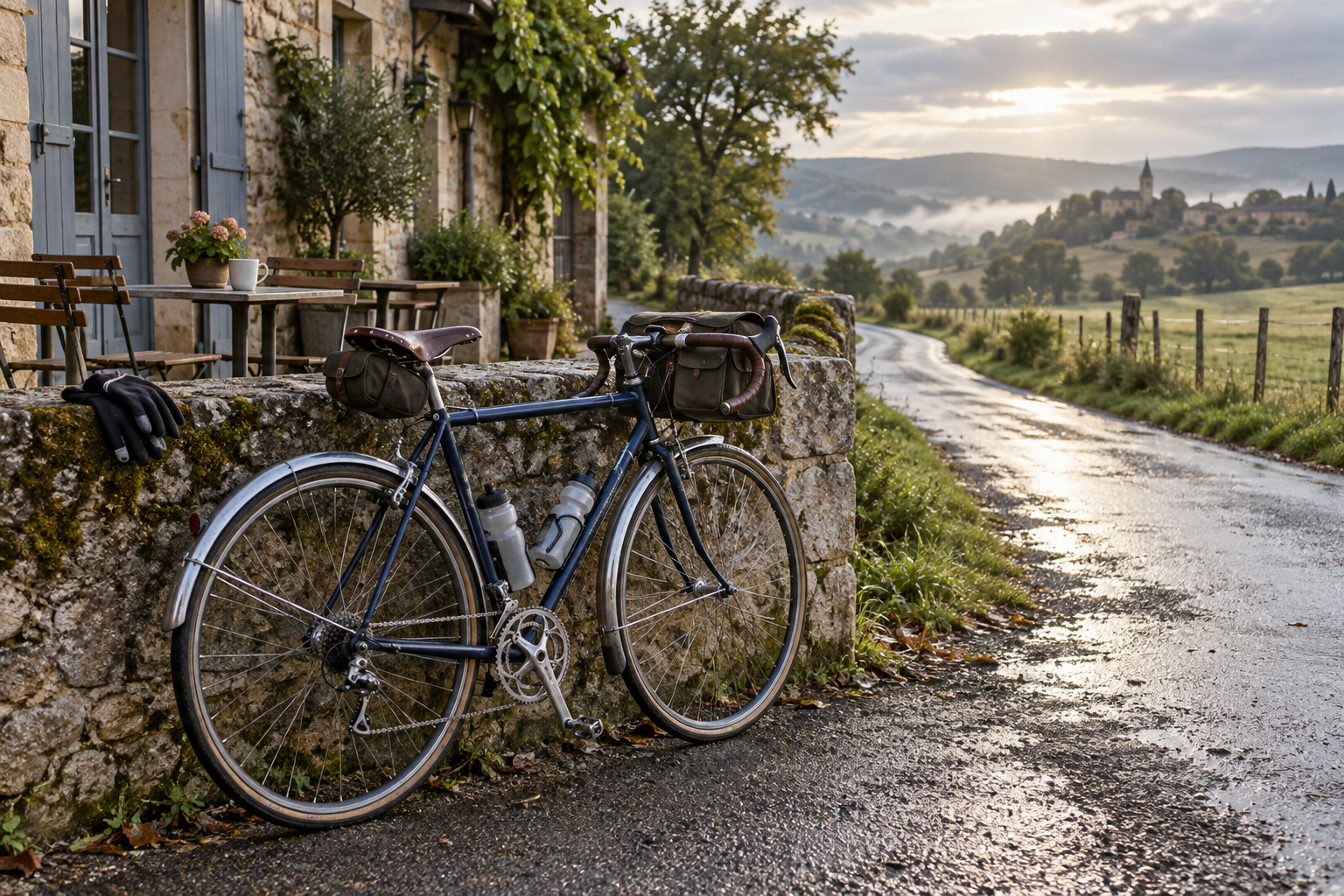
There is a documentary side to the ride, too. At checkpoints, riders must record proof of passage in the form specified by the organiser: brevet-card entries, receipts or digital confirmation. Accumulating the distance alone is insufficient; following the designated route matters.
Self-reliance does not mean riding alone. You can join others, but navigation, mechanical problems and a plan for getting home remain your responsibility. Cafes and shops can shape the rhythm of the day, while the clock keeps running during food and rest stops.
When choosing a first brevet, consider the terrain, checkpoints and food opportunities as well as the distance. Much of the format’s appeal lies in learning to balance riding and stopping over an entire day.