
On 12 June 1817, Karl Drais rode from Mannheim towards Schwetzingen and back on a wooden running machine. It had two wheels, a steerable front end and propulsion supplied by feet pushing against the ground. The smooth road helped; rougher surfaces elsewhere limited its usefulness.
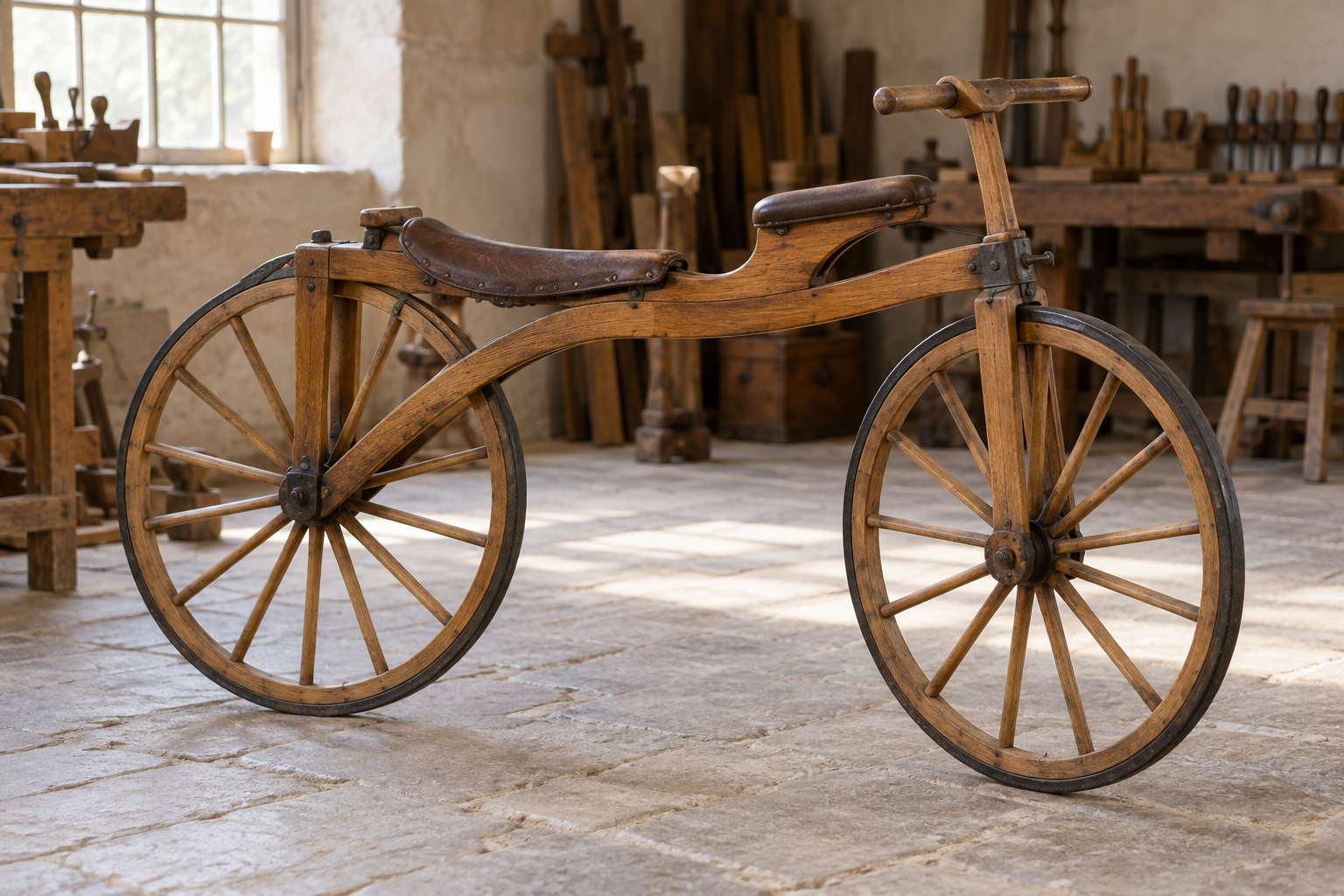
Drais sold drawings for craftsmen to build the machines. Widespread adoption remained distant: cost, public attitudes and administrative obstacles demanded more than a clever mechanism. Pedals and chain drive belonged to later stages of development.
The revealing detail is the sequence: steering and balance came before pedals. Looking at this early construction makes the familiar bicycle easier to appreciate as the product of improvements across generations.