
Danish inventor Mikael Pedersen patented a bicycle in 1893 whose defining feature was a flexible woven saddle. It resembled a hammock, and the frame was developed around that idea. The unusual silhouette therefore begins with the point where rider and bicycle meet.
The cord seat was suspended between the handlebars and the rear of the frame. It followed body movement and was intended to make long journeys more comfortable. Dursley refers to the English town where the bicycles were made from 1896 to about 1914, when competing frame layouts still offered different answers.
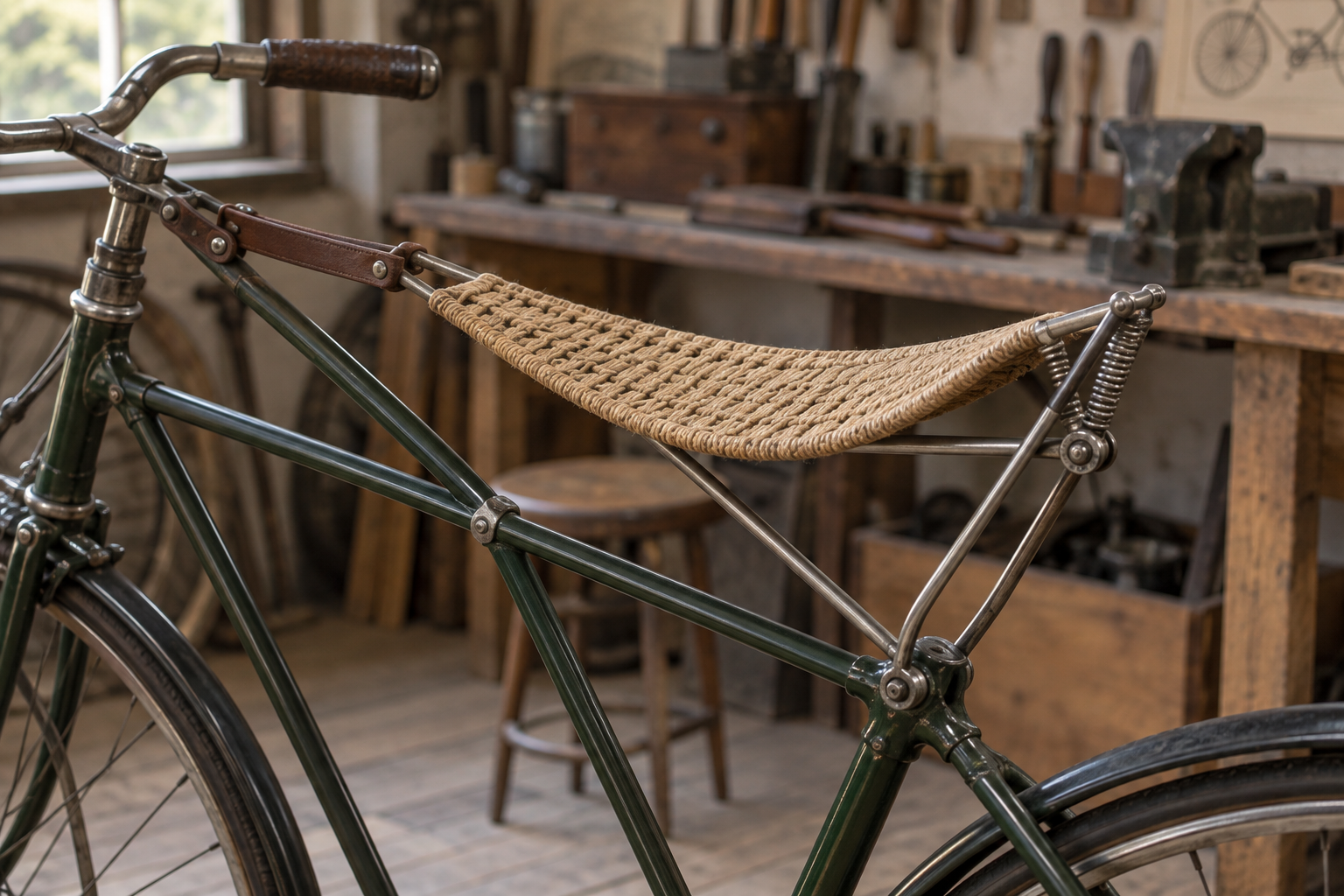
Railway truss bridges inspired the triangular structure, which sought stiffness through many slender members. A leather strap at the front allowed saddle tension to be adjusted. Frame architecture and seat behaviour were linked. That makes the Pedersen a revealing design example: one idea about comfort helped determine the shape of the entire bicycle.